For couples planning a Sikh wedding in the UK, an early question is what happens first at the gurdwara, and what follows. The Anand Karaj ceremony has a clear spiritual centre, but the wider morning may include family greetings, hymns, food and photographs. Knowing which moments belong to the religious service—and which are optional customs—helps guests follow along respectfully.
The usual Sikh wedding ceremony order in the UK
The common flow is family arrival and milni, entry into the prayer hall, kirtan and opening prayer, guidance for the couple, four laavan, closing prayers and a communal meal. The religious heart is marriage before the Guru Granth Sahib, the Sikh scripture regarded as the living Guru. A reception elsewhere is separate.
1. Arrival and milni: the families meet
The groom’s party often arrives first and is welcomed by the other family. A milni may follow, bringing corresponding relatives together to exchange greetings or garlands. Some families include refreshments or introductions. This is a Punjabi family custom, rather than an essential part of the Anand Karaj.
For a large UK wedding, nominate one relative to coordinate greetings and another to direct guests towards the shoe area. That simple arrangement prevents a lengthy milni from delaying the gurdwara wedding ceremony.
2. Guests enter the darbar hall for kirtan
Before entering, everyone removes shoes, covers their head and normally washes their hands. Guests enter quietly and sit on the floor facing the Guru Granth Sahib. Some gurdwaras seat men and women separately; arrangements vary, so follow the volunteers’ guidance.
Kirtan, the singing of sacred hymns, creates a reflective atmosphere. The couple sits near the front, traditionally with the bride to the groom’s left. Guests unfamiliar with the service can simply listen.
3. Opening ardas and guidance for the couple
An ardas, or congregational prayer, opens the proceedings. The person conducting the service explains the spiritual responsibilities of married life, including mutual care, faithfulness, respect and shared commitment. The ceremony is not centred on exchanging rings or repeating Western-style vows.
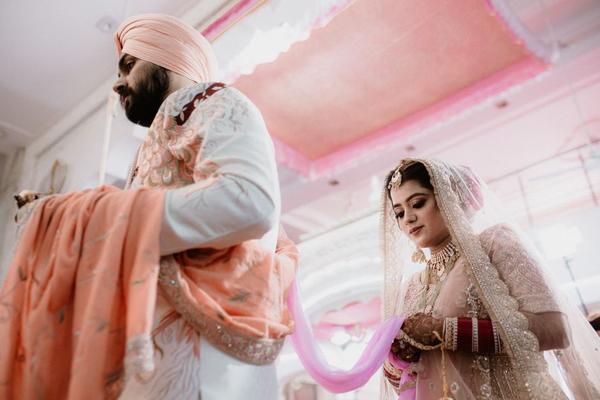
The couple’s willingness to marry is affirmed. A palla, usually a scarf or cloth worn by the groom, is then held by the bride to symbolise their shared path. Who places it in her hands can vary.
4. The four laavan: the central marriage rite
The four laavan are hymns composed by Guru Ram Das. Each is read from the Guru Granth Sahib and sung, while the couple makes a circuit around it. The groom traditionally leads and the bride follows holding the palla. They return to their places before the next hymn.
The hymns express a deepening spiritual relationship, devotion and harmony in married life. Guests should remain seated, allow the couple clear passage and avoid stepping into the route for photographs.
If a heavy wedding outfit makes walking difficult, ask the gurdwara beforehand for a quiet explanation of the route. Preparation is more useful than attempting a rehearsal during worship.
5. Closing prayers, hukamnama and karah prashad
After the laavan, the service commonly includes Anand Sahib, a concluding ardas and a hukamnama, a passage read from the Guru Granth Sahib. The congregation stands for ardas when directed and then sits again. Volunteers may distribute karah prashad, a sacred sweet preparation, received respectfully in cupped hands.
The precise order of hymns and readings can differ, so follow the person leading the service and the gurdwara’s arrangements.
6. Langar and celebrations afterwards
Guests usually share langar, the free vegetarian meal served in the gurdwara’s community kitchen. It reflects equality and hospitality, not a formal wedding breakfast with a seating hierarchy. Follow the volunteers’ instructions and take only what you need.
Family photographs, a doli or farewell, and an evening reception may happen afterwards. Mehndi, jaggo and other lively Sikh wedding traditions are familiar at many celebrations, but they are not required steps within the Anand Karaj.
Planning the gurdwara morning without rushing it
Book the gurdwara before confirming a reception start time. Ask for its running order, arrival instructions, photography policy, permitted decorations, catering arrangements and guidance on who may participate in the Anand Karaj. Gurdwaras have different booking procedures, and some require meetings with the couple.
Consider a couple marrying in Birmingham with 180 guests and a hotel reception later that day. Their schedule needs room for parking, shoe removal, greetings, langar and travel across the city. A buffer after the religious service is wiser than asking those conducting worship to hurry.
Send guests a short note about arrival time, head coverings and modest clothing. A companion guide to gurdwara etiquette for wedding guests can answer common questions. A wedding day timeline checklist can also help coordinate transport and photography.
Does an Anand Karaj count as a legal marriage in the UK?
The religious ceremony and legal marriage are not automatically the same. In England and Wales, a marriage can take place in a religious building registered for marriages if legal requirements are met, including an authorised person or registrar and the necessary documentation. Couples normally must give notice at least 29 days beforehand.
If the gurdwara cannot conduct the legally recognised marriage, arrange the civil marriage separately. Scotland and Northern Ireland have different procedures, so check the relevant government guidance before booking. A guide to UK wedding ceremony paperwork can help keep the two processes clear.
Guest etiquette that matters most
A gurdwara is a place of worship throughout the wedding. Cover your head, remove footwear, dress modestly and silence phones. Alcohol, tobacco and intoxicants are not permitted on the premises. Ask before taking photographs, and never obstruct the laavan or stand in front of the Guru Granth Sahib for a better angle.
Non-Sikh guests are generally welcome to attend respectfully. Participation in the marriage rite is a different question: Sikh institutions follow religious rules on eligibility, and couples should discuss their circumstances directly with the gurdwara before issuing invitations.
Frequently asked questions
How long does a Sikh wedding ceremony take?
The core Anand Karaj may take around an hour, but the full gurdwara visit can last longer with milni, kirtan, langar and family greetings. Ask your chosen gurdwara for a realistic timetable.
What is the most important part of the ceremony?
The four laavan are central. Each hymn is read and sung as the couple walks around the Guru Granth Sahib, expressing a shared spiritual journey.
Do guests need to understand Punjabi?
No. Guests can follow the service respectfully without speaking Punjabi. Some gurdwaras offer explanations or translations, and couples can share a short programme beforehand.
Is the milni part of the religious ceremony?
Milni is a customary family welcome, not the essential Sikh marriage rite. Its format varies, and some couples keep it brief or omit it.
A meaningful order, not a rigid performance
Planning a Sikh wedding ceremony in the UK means protecting the sacred sequence while allowing flexibility around it. Confirm the gurdwara’s practices, explain etiquette to guests and arrange legal registration separately when necessary. With those details settled, families can give the Anand Karaj the attention it deserves.