A registrar wedding ceremony in the UK is often simpler than couples expect, but simple does not mean impersonal. A short legal framework makes the marriage valid, with room around it for music, readings, rings and personal promises. Knowing which moments are compulsory helps you plan the rest without worrying that something important has been missed.
The familiar format below is particularly common in England and Wales. Scotland and Northern Ireland have their own rules, so always confirm the wording and arrangements with the registrar conducting your wedding.
Before the ceremony: arrival and final checks
Most couples meet the registrar shortly before the ceremony, sometimes separately. The registrar may confirm personal details, check that the marriage paperwork is correct and explain where you will stand, when to speak and how signing works. Arrive at the time your register office or venue specifies; other ceremonies may be booked that day.
In England and Wales, couples normally give legal notice before the wedding, not on the day itself. Notice identifies the chosen venue, and the ceremony must happen within the permitted period. Our guide to giving notice of marriage explains this separate step.
You will also need witnesses. In England and Wales, at least two must attend a civil marriage. Choose people who can follow the proceedings and are comfortable signing the marriage schedule. Ask your registration service if you are unsure about eligibility.
What happens during a registrar-led ceremony?
Welcome and opening words
Once everyone is seated, the couple enters or takes their place and the registrar welcomes the room. There may be a short introduction about marriage or a statement explaining why everyone has gathered. Entrance music, seating and processional order are usually choices rather than legal requirements.
The legal declarations
For a marriage in England and Wales, each partner must make a declaration confirming that they are free to marry. The legal declarations required at a wedding in the UK are not identical in every nation. Your registrar will explain the approved alternatives and prompt you, so you do not need to memorise a speech.
One permitted approach is to answer a question confirming that you are legally free to marry your partner. Both people must make the declaration clearly in front of the appropriate official and witnesses.
The words that create the marriage
The other essential spoken part in England and Wales is the contracting wording: each person uses an approved form of words taking the other as their wife or husband. These words are sometimes described as registrar wedding vows, although they are distinct from the romantic promises couples write themselves.
You cannot replace the statutory wording with a poem or personal promise. Treat the compulsory words as fixed, then build your personal moments around them. The registrar guides you through the permitted choices.
Rings, personal vows and readings
Couples may also exchange rings and make personal promises, according to the agreed running order. Rings are traditional, not a condition of a valid marriage. If you prefer no rings, tell the registrar when discussing your ceremony.
A civil registrar ceremony can feature a reading by a friend, instrumental music or a favourite non-religious song. In England and Wales, civil ceremonies must not include religious content. Seek approval of your selections beforehand rather than assuming a popular wedding reading will be suitable. Our civil wedding ceremony readings guide offers ideas.
Signing the marriage schedule
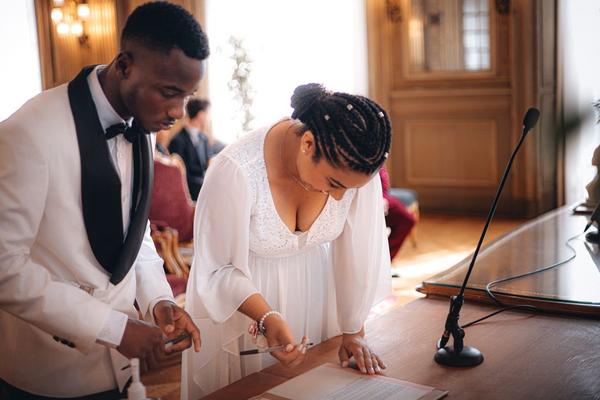
After the marriage is solemnised, the couple, two witnesses and the relevant registrar sign the marriage schedule. This is an official document, not a decorative certificate for photographs. The registrar will show everyone where to sign and handle the registration arrangements.
In England and Wales, the signed schedule is added to the marriage register after the ceremony. You can then obtain a marriage certificate through the registration service; do not assume one will be handed to you immediately. Check arrangements if you need it quickly.
Closing words and leaving as a married couple
The registrar may present you as married, invite applause and conclude the ceremony. You might leave to music, pause for photographs or move straight to the reception. These touches are celebratory rather than the legal act of marrying.
A practical example of the running order
Imagine a couple having a small Saturday ceremony in a council-approved hotel in England. They choose an entrance song, the required legal words, rings, a short reading by a sibling and an exit song. They ask the registrar to review their reading and music in advance.
They also give their witnesses a simple job: arrive early, listen and be ready to sign. Instead of trying to rewrite the legal declarations, they add two brief personal promises during the optional part. The ceremony feels intimate without interrupting the legal sequence.
A register office wedding checklist can record witness names, arrival times, approved readings, music cues and any accessibility or interpretation arrangements. Give everyone involved the same final running order.
How the rules differ across the UK
It is misleading to describe one script as the universal UK ceremony. England and Wales require prescribed declarations and contracting words for civil marriages. In Scotland, there are no legally prescribed marriage vows, but the couple and celebrant must make the declarations required by Scottish law in front of two witnesses. Scottish civil marriages are conducted by authorised registrars or assistant registrars.
In Northern Ireland, a registrar or deputy registrar conducts a civil marriage and ensures the marriage schedule is available for signing. Couples can include suitable music, poetry and rings, but not religious content. Scotland and Northern Ireland specify that witnesses must be at least 16. Follow guidance for the nation where your wedding will take place.
Frequently asked questions
How long does a registrar wedding ceremony take?
It depends on the council, location and number of optional readings or music choices. A straightforward ceremony may be brief; a personalised one can take longer. Ask your registrar for your allotted time rather than relying on a general estimate.
Can we write our own registrar wedding vows?
Usually, you can add personal promises, subject to the registrar’s approval. In England and Wales, they cannot replace the compulsory legal words. Scotland has different rules about vows and declarations, so confirm the wording locally.
Do we have to exchange rings?
No. Rings can be meaningful, but they are optional. Tell the registrar if you would rather leave out that section.
Who signs the marriage schedule?
For a typical civil wedding, both partners, two witnesses and the officiating registrar sign the marriage schedule. The registrar will explain the procedure and what happens to the document afterwards.
Making the ceremony your own
The easiest way to feel relaxed is to separate the non-negotiable legal steps from the choices that express your relationship. Confirm the wording, witnesses and paperwork first. Then shape the music, readings and promises around them. A registrar-led ceremony can be properly legal and unmistakably personal.