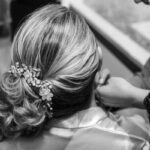

Half-up, half-down bridal hair offers an appealing balance: the front stays neatly framed while the lengths move naturally. It can feel romantic, polished, or understated depending on the texture and how the upper section is secured. The detail brides sometimes overlook is that the pinned section has a job beyond looking pretty. It may need to support a veil, hold an accessory, and stay comfortable for hours.
Before settling on a look, consider your natural texture, your dress neckline, and whether you plan to remove your veil after the ceremony. Those choices will help you find a hairstyle that works beyond the first photograph.
Half-Up, Half-Down Bridal Hair Styles to Consider
Soft Waves with a Twisted Crown
Two loose sections twist away from the face and meet at the back, with soft waves below. This suits romantic gowns without hiding the neckline. Ask your stylist to leave a little softness at the temples. For a more contemporary finish, keep the crown smooth and concentrate movement through the ends.
Classic Wedding Curls
Defined wedding curls bring a more formal finish to the loose section. Large curls brushed into flowing waves feel glamorous, while smaller separated curls create lively texture. The stylist should set each curl, let it cool, and then shape it. Photograph the result from behind: the width and placement of the curls matter as much as their definition.
Braided Half-Up Hair
A slim braid on each side can meet beneath a floral pin or wrap around a hidden fastening. This variation works particularly well for garden celebrations. Avoid taking too much hair into the braids, however, or the lower section can appear thin. A relaxed braid can look intricate without needing a bulky crown.
Sleek, Straight Half-Up Styling
Not every bride wants curls. Smooth lengths, a clean part, and a polished half-up fastening complement minimalist dresses and striking necklines. Straight hair shows uneven sections more clearly, so precision matters. A narrow piece of hair wrapped around a discreet elastic can conceal the fastening.
Build Volume Where It Counts
Good volume is about proportion, not making the crown as high as possible. A little lift toward the back of the head can create an elegant profile. Too much height at the front may change your face-framing shape and make the style look unlike the inspiration photo.
Fine hair may benefit from a lightweight root product, careful drying, and a small concealed anchor. Thick hair often needs less teasing and more secure pin placement to control its weight. For curly or coily hair, work with the natural pattern rather than brushing away definition. The aim is controlled shape, not unnecessary stiffness.
Bring front, side, and rear reference photographs to the trial. Some bridal half up hairstyles shown online use extensions or hairpieces. Your stylist can adapt the proportions to your own length and density instead of promising an exact copy.
Where Should the Veil Go?
A veil with half up hair has a useful advantage: the gathered portion can offer an attachment point. A comb placed at or just above the pinned crown makes the veil more prominent. Placing it beneath the twist or braid reveals more of the hairstyle, although the lower position still needs a secure base.
Try the actual veil at your hair trial, especially if it has a heavy embroidered border. A discreet backcombed section, hidden braid, or additional pins may help support the comb. The veil should not tug when you turn your head. Ask your stylist to test removal, too: taking the veil out should not dismantle the half-up section.
If you are unsure about length or placement, compare different wedding veil styles before choosing an anchor point. A few centimetres can change how the veil and hairstyle appear together in back-view photographs.
How to Keep Half-Up Wedding Hair Secure
The secret to lasting half up wedding hair is a reliable structure beneath the decorative finish. A concealed elastic, crossed pins, or a small anchor braid can hold the gathered section independently of a pearl clip. Decorative accessories should enhance the hairstyle rather than carry all its weight.
Product choice matters, but more hairspray is not always better. Heavy products can flatten fine hair; humidity can affect smooth finishes; loose curls may naturally soften as the day progresses. Tell your stylist how your hair behaves so they can prepare it appropriately. Pins should feel stable without pulling painfully at your hairline.
For an outdoor ceremony, check whether face-framing pieces blow across your eyes or lipstick. A tiny change in their placement can help. If your curls usually fall quickly, start with a slightly firmer set designed to relax gradually into waves.
Choosing Accessories That Work with Your Dress
Pearl pins scattered across a twist feel delicate; one crystal comb creates a clear focal point. Small flowers pair beautifully with braids, though fresh blooms may wilt in heat. A headband or tiara can work too, provided it does not interfere with the veil’s attachment.
Let your gown guide the level of detail. Elaborate lace may look better with restrained accessories, while simple satin can carry a statement piece. A bridal hair accessories guide can offer inspiration without adding too many competing details.
Make Your Hair Trial a Real Test
Bring photographs of your dress, your actual veil, and accessories. Explain whether the hairstyle needs to survive a veil change or whether you want to loosen it for dancing. These choices affect the fastening method. A bridal hair trial checklist is useful for keeping track of the placement and products you liked.
Take photographs from every angle and wear the style for several hours if possible. Watch for a collapsing crown, uncomfortable pins, or curls that lose their shape. For example, a bride planning a windy outdoor ceremony followed by an indoor reception could test the veil in a light breeze, then practise removing it without disturbing the twists.
Frequently Asked Questions
Does half-up, half-down bridal hair work on medium-length hair?
Yes. A smaller twist or braid can secure the upper section while shoulder-length waves provide movement. Extensions are optional, not essential.
Will a half-up hairstyle hold a heavy veil?
It can, but that depends on the veil’s weight, the comb, your hair density, and the anchor. Test the complete combination with your stylist.
Should I curl my hair before pinning it half up?
Many stylists set the lengths first and assemble the upper section afterward. The best order varies with texture and the desired finish. Let heated curls cool before brushing them out.
Can I remove my veil without ruining the hairstyle?
Usually, when the veil has its own accessible anchor. Rehearse removing the comb at the trial and ask a trusted person to help on the day.
A Beautiful Style Is Also a Practical One
The strongest half-up, half-down bridal hair balances shape, movement, and dependable hold. Choose the overall silhouette first, plan the veil attachment second, then add curls, braids, or accessories where they genuinely improve the look. That approach creates a hairstyle that feels like you and stays comfortable from ceremony to celebration.