
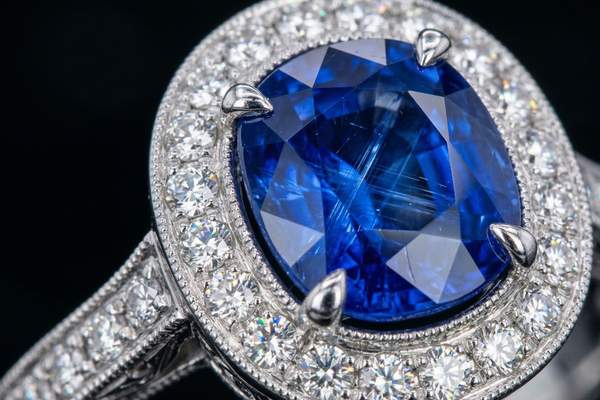
Sapphire engagement rings suit couples who want colour, character and enough durability for everyday wear. Blue remains the classic choice, but sapphire also appears in pink, yellow, green, teal, peach and colourless varieties. That mix of personality and practicality makes it a compelling alternative to a traditional diamond centre stone.
Why sapphire works so well for an engagement ring
Sapphire is a variety of corundum, the same mineral family as ruby. Red corundum is classified as ruby, while other colours are generally described as sapphire. It ranks 9 on the Mohs scale of hardness and has good toughness, so it resists scratching better than many coloured gemstones and is well suited to rings worn frequently.
It is not indestructible. A hard impact can still damage a stone or loosen its setting, so rings should be removed for heavy manual work, weight training or other activities where they may be struck. For normal daily wear, though, sapphire is one of the more practical coloured gemstone choices.
Choosing the right sapphire colour
Classic blue sapphires
A blue sapphire engagement ring can range from pale cornflower tones to royal blue and dark navy. Colour is usually the most important visual quality factor. Look for a stone that appears lively rather than inky, with enough saturation to look distinctly blue while still reflecting light through the face of the gem.
Some sapphires show colour zoning, where one area is lighter or darker than another. Skilled cutting can reduce its visual impact, but it is worth inspecting the stone from several angles and in different lighting.
Pink, yellow, green and teal options
Coloured sapphire rings can feel very different depending on hue. Pink has a romantic look, yellow feels bright and warm, while green and teal suit buyers who want something less traditional. Peach-toned sapphires can pair especially well with rose or yellow gold.
A useful real-world test is to compare two or three stones near a window, then move them into ordinary indoor lighting. Sapphire colour can look noticeably different under warm bulbs and cool LEDs, so the stone that remains appealing in both conditions is often the safer long-term choice.
Cut, clarity and size matter too
Sapphires are commonly cut into oval, cushion, round, emerald, pear and other shapes. A good cut should create balanced proportions and an attractive pattern of brightness. Avoid stones with a large dull area or an obvious window where you can see straight through the centre.
Natural sapphires may contain inclusions, and complete visual perfection is not always necessary. The key is whether inclusions distract from the stone or create durability concerns. If you are comparing gemstone options, a diamond versus coloured gemstone engagement rings guide can be a useful internal reference because carat weight does not translate into identical face-up size across different gem materials and cuts.
Sapphire ring settings: style and protection
Sapphire ring settings influence both appearance and security. Four- or six-claw settings expose more of the gemstone and can create an open look, but the claws should be checked periodically. A bezel surrounds more of the stone with metal, offering additional edge protection and a clean, modern finish.
Halo settings add sparkle around the sapphire, while three-stone rings can pair a coloured centre with diamond side stones. An engagement ring settings guide is a natural internal reference for comparing claw, bezel, halo and three-stone designs.
Lifestyle matters as much as aesthetics. Someone who wears gloves for work, handles children frequently or uses their hands all day may find a lower-profile setting more comfortable because it is less likely to catch.
Metal choice changes the overall look
Platinum and white gold tend to emphasise cool blue and teal shades. Yellow gold creates a warmer contrast with deep blue stones and complements yellow, green and peach sapphires. Rose gold often suits pink and peach tones. Compare the same sapphire beside different metal colours before deciding, because the surrounding metal can noticeably change how the stone reads.
Understand sapphire treatments before you buy
Sapphire treatments are an important part of the buying decision. Heat treatment is common and widely accepted because it can improve colour or clarity. Fine untreated sapphires are rarer and may command higher prices when their untreated status is confirmed by an independent laboratory.
Other treatments, including lattice diffusion and fracture filling, should also be disclosed. Diffusion treatment can introduce colour-causing elements into a stone and generally affects value differently from conventional heating. Fracture-filled material may require more cautious care because fillers can be affected by some chemicals or cleaning methods.
For a significant purchase, ask whether the sapphire is natural or synthetic, what treatments have been used and whether an independent gemmological report is available. A report is especially useful when a premium is being charged for an untreated stone, claimed origin or rare colour.
What to check before buying
Start with the appearance you genuinely enjoy, then check the technical details. View the sapphire in more than one lighting condition, look for distracting colour zoning, and make sure the cut does not leave a large lifeless centre. Inspect the setting from the side to see how high the stone sits and whether the edges are protected.
Ask for the ring’s metal specification, resizing limitations, warranty terms and aftercare policy. If buying online, confirm the returns period and whether photos or video show the exact sapphire rather than a representative example. A ring sizing guide can also be a helpful internal reference before ordering a design that may be difficult to resize later.
FAQ
Are sapphire engagement rings suitable for everyday wear?
Yes. Sapphire has a Mohs hardness of 9 and good toughness, making it suitable for daily-worn jewellery. The setting still needs sensible care, and the ring should be removed before activities likely to expose it to hard knocks.
Is a blue sapphire engagement ring always natural?
No. Sapphires can be natural or laboratory-grown, and natural stones may also be treated. Ask the seller for clear disclosure and consider an independent laboratory report for higher-value purchases.
Does heat treatment mean a sapphire is poor quality?
No. Heating is a common and accepted treatment for sapphire. Untreated stones of fine quality may be rarer and more valuable, but a well-cut heat-treated sapphire can still be an excellent engagement ring stone.
How should a sapphire ring be cleaned?
Warm soapy water is a safe general option. Cleaning advice can differ for treated stones, particularly fracture-filled or dyed material, so follow the jeweller’s or laboratory’s guidance and disclose treatments when the ring is professionally cleaned.
A distinctive choice with long-term practicality
The best sapphire engagement rings are not simply diamond substitutes. They bring their own colour, personality and history while remaining practical for long-term wear. Focus first on a colour that looks beautiful in real life, then consider cut, setting, treatment disclosure and workmanship. A carefully chosen sapphire can deliver the individuality of a coloured gemstone without requiring a major compromise on everyday durability.