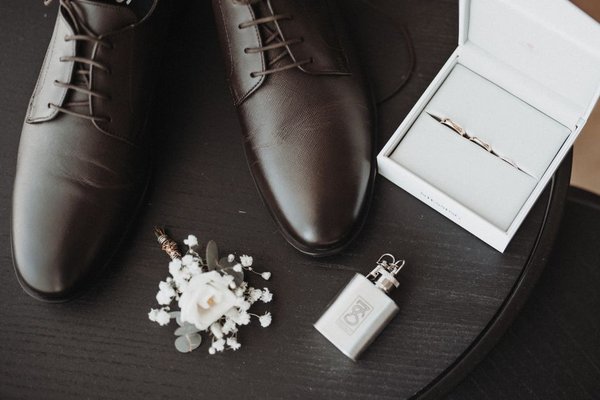
A coordinated wedding party can still look mismatched when the accessories are left until the last minute. One groomsman chooses tan shoes, another brings a shiny tie, and a third forgets his pocket square. This groomsmen accessories checklist focuses on those finishing details, so everyone looks connected without being dressed identically.
Before anyone shops, share a photo of the chosen suit and shirt alongside a short list of approved colours and styles. A reference image in natural light is more reliable than saying “dark blue” or “smart shoes.” Make clear which items are required, which are optional and which the couple will provide.
Quick groomsmen accessories checklist
• Tie or bow tie: agreed colour, texture and approximate width.
• Pocket square: required or optional, with a shared colour direction.
• Belt or braces: choose the option that suits the trousers.
• Shoes: approved colour, material and level of formality.
• Socks: suitable shade and enough length for seated photographs.
• Shirt accessories: cufflinks where the cuffs require them, plus collar stays if useful.
• Final details: boutonniere, watch and optional tie bar.
Use the list as a packing check as well as a shopping guide. A completed purchase is no help if the item is still at home on the wedding morning.
Groomsmen ties: match the look, not necessarily the product
Colour, width and fabric matter
Groomsmen ties do not always need to be identical, but they should have a shared visual language. A matte navy tie looks different beside a glossy royal-blue one, even if both were advertised as blue. Agree on fabric finish and a sensible width range. If the groom has distinctive neckwear, a complementary shade or pattern can set him apart.
Decide on the knot before the ceremony. A simple four-in-hand suits many standard ties, while a wider knot may suit some collar shapes. Anyone unfamiliar with tying one can consult a wedding tie knot guide and practise ahead of time.
What to do with pocket squares
Groomsmen pocket squares look better when they complement ties rather than duplicate them. With charcoal suits and navy ties, for instance, a white square with a subtle navy edge adds cohesion. If ties are patterned, choose restrained squares. A neat straight fold tends to suit formal settings; a softer fold feels relaxed.
Belts and braces: choose one system
Groomsmen belts should work with both the trousers and shoes. Black leather shoes usually pair most naturally with a black leather belt; for brown shoes, stay within a similar colour family. Buckles need not match perfectly, but oversized designs can distract when jackets come off.
Braces, or suspenders, are an alternative for suitably designed trousers. They can be especially useful when an outfit is tailored around them. Wearing both a belt and braces is generally unnecessary. Some formal trousers, including many tuxedo styles, have no belt loops, so inspect the garments before issuing instructions.
Groomsmen shoes and socks deserve specific rules
Prevent the one-pair mismatch
“Wear dress shoes” is too vague. State whether Oxfords, Derbies or loafers are acceptable, whether the finish should be smooth leather or suede, and whether the colour is black or brown. Black dress shoes are commonly chosen for formal evening weddings, while brown shoes may suit less formal daytime attire.
Imagine five attendants in charcoal suits. Four arrive wearing black lace-up shoes; the fifth wears pale tan suede loafers. The shoes attract attention in group photographs despite the matching suits. A note saying “black leather lace-up dress shoes, no suede or trainers” could avoid the problem without forcing anyone to buy a particular brand.
Remember comfort and sock length
Wear new shoes briefly indoors before the event to identify rubbing or poor fit. Check that soles work on the venue surface, especially grass or polished flooring. Anyone using rented footwear should confirm collection dates and sizing early.
Socks should stay visually consistent when trousers rise while sitting. Dark socks are usually a safe choice with dark formal suits, though coordinated patterned socks can be a deliberate feature. Bringing a spare pair is sensible for rainy days or long celebrations.
Cufflinks, watches and boutonnieres
Cufflinks are only necessary if shirts have the appropriate cuffs. Ordinary button cuffs do not need them. Tie bars are optional, but they should fasten the tie to the shirt rather than simply clip across the tie. Keep metal accessories reasonably understated.
Watches do not need to match. A simple dress watch can blend into formal attire, while a large sport watch may draw attention. Personal or sentimental pieces are worth allowing when they do not clash with the dress code.
Find out whether the florist or couple supplies boutonnieres and designate someone to distribute them. Fresh flowers may need careful handling and should be attached without damaging delicate lapels. Do not assume that everyone knows how to position or pin one.
Coordinate people, not mannequins
A useful method is to divide decisions into fixed, flexible and personal categories. The tie colour might be fixed. The choice between two approved black shoe styles could be flexible. A discreet personal watch can remain individual. This approach creates consistency without ignoring comfort, budget or different body types.
Ask attendants what they already own before suggesting purchases. A groom and groomsmen suit colour guide can help settle the main palette first; accessories should follow the suits, not dictate them. For mixed silhouettes, coordinate formality and colour instead of demanding identical cuts.
Make the final check a week or two before
Have each person send a full-length photograph in the complete outfit, including shoes. Review it for missing pieces, unexpected colours and fit issues. A wedding outfit fitting checklist is useful for checking hems, sleeves and collars while alterations are still possible.
Assign someone to bring an emergency kit containing spare dark socks, a neutral pocket square, an extra tie, safety pins and a lint roller. Keep boutonnieres with their designated organiser. On the morning of the ceremony, lay out every piece before getting dressed.
Frequently asked questions
Do groomsmen need identical accessories?
No. Coordinated colours, fabrics and formality usually matter more than matching brands. A few individual details can look intentional.
Should the pocket square match the tie exactly?
Not necessarily. A complementary colour or subtle shared detail often appears more polished than identical printed sets.
Can groomsmen wear braces and belts together?
It is generally better to choose one. Follow the trouser construction and the agreed level of formality.
Who should pay for the accessories?
There is no universal rule. Couples sometimes provide ties or pocket squares, while attendants supply shoes. Explain expected costs early.
The last details make the difference
The strongest accessory plan is clear but not rigid. Set the essential rules, share a visual example, review complete outfits before the wedding and pack a few backups. That small amount of coordination prevents last-minute surprises and lets the wedding party enjoy the day.