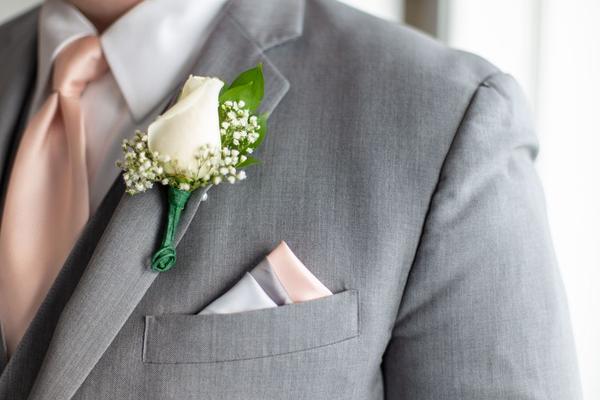
A groom’s pocket square occupies little space, yet it can transform the impression of a wedding suit. White linen makes dark tailoring look crisp; a softly patterned silk puff can relax a summer outfit. The goal is to finish the look, not compete with it.
This groom pocket square guide explains how to choose colours, fabrics and pocket square folds, and how to coordinate with a tie and other groom accessories. The most successful choice usually looks intentional without appearing overmatched.
Start With the Suit and Shirt
Before choosing a square, look at your suit, shirt and tie together. The pocket square works best as a supporting detail: it can echo an existing colour, add gentle contrast or introduce texture. A navy suit and white shirt, for instance, might suit white linen for formality, pale blue silk for softness or a burgundy print for a more expressive finish.
Also consider the ceremony. A formal evening reception generally calls for restraint, while a garden wedding gives you more room for colour and an informal fold. There is no single correct wedding pocket square for every outfit.
Choosing the Right Pocket Square Colour
Keep It Classic With White
White is a dependable choice with navy, charcoal and black suits. It looks especially sharp in a slim, straight fold and complements a white dress shirt without creating a matching accessory set. With an ivory shirt, compare shades in daylight so an unexpectedly bright white does not look disconnected.
Echo a Colour Rather Than Copying It
If your tie is forest green, try a cream square with a small green motif. A burgundy tie can work beautifully beside soft white or pale pink. The colours relate, but the accessories have distinct roles.
You do not need to reproduce the bridesmaids’ dresses or floral palette exactly. A restrained reference often looks more elegant than an identical colour repeated across the tie, square and boutonniere.
Balance Patterns
Plain ties leave room for a modest dot, paisley or geometric print in the square. If the tie has a bold pattern, use a mostly solid square. When both pieces are patterned, change the scale so the details do not compete in photographs.
Fabric Matters as Much as Colour
Linen has enough structure for crisp folds and suits traditional tailoring. Cotton is similarly understated, while silk drapes naturally into rounded, relaxed shapes. Wool and wool blends can add warmth and texture to autumn or winter outfits.
Notice the contrast with the jacket: soft silk against tweed feels different from matte linen against smooth wool. Avoid overfilling the breast pocket, especially with thick fabric. If the jacket bulges, use a slimmer fold or lighter square instead of forcing it down.
Four Pocket Square Folds That Work for Weddings
The Straight Fold
Fold the square into a rectangle slightly narrower than the pocket, then adjust it until a narrow horizontal band shows. Sometimes called the presidential fold, it is particularly suited to white linen, dark suits and formal ceremonies.
The One-Point Fold
Fold diagonally into a triangle, tuck the sides inward and place the single point above the pocket opening. This adds character while keeping a tidy outline. Cotton or linen helps the point hold its shape.
The Two-Point Fold
Offset the corners when folding diagonally, creating two visible tips. Bring the sides inward to fit the pocket. Keep the points modest; tall peaks can look theatrical beside a boutonniere.
The Puff Fold
Pinch the centre of a silk square, gather the hanging fabric and tuck the ends into the pocket. Adjust the rounded top until it looks soft rather than oversized. This works especially well with linen suits, daytime celebrations and outdoor weddings.
How to Pair a Tie and Pocket Square
A tie and pocket square should coordinate, not look as though they were cut from the same cloth. Change the shade, pattern or texture. For example, a burgundy silk tie with off-white linen feels polished; a patterned blue tie with a navy square featuring tiny white dots has more personality.
The same approach applies to bow ties. If you are going without a tie for a relaxed ceremony, a subtle pocket square can provide colour without looking too formal. A low puff is usually more natural than a sharply pointed fold.
Practical Pairings for Different Weddings
For a black-tie celebration, try a white linen straight fold with dark formalwear. With a light-grey summer suit, a muted blue silk puff is softer. A charcoal three-piece suit can take a cream square with a discreet burgundy detail if your tie already includes that shade.
Here is a useful test: imagine a tan linen suit, cream shirt and sage-green tie at a garden ceremony. Rather than buying an identical sage square, try ivory silk with a narrow green border. Fold it loosely so the green appears only in small glimpses. The outfit feels coordinated without becoming a colour block.
Choose tailoring before accessories. A guide to choosing wedding suit colours can help you settle on the main palette; advice on coordinating groomsmen outfits can help you decide where the groom should look slightly different.
Check the Overall Look Before the Ceremony
Try on the entire outfit, including a boutonniere. A large flower and a bright, tall square can crowd the same area of the jacket. Let one be prominent and keep the other quieter.
Take a photograph in natural light from a few steps away. If the square catches your eye before your face, show less fabric or simplify the print. Sit down and stand up to check that the fold stays in place. Keep phones and sunglasses out of the breast pocket so its shape stays neat.
Review the rest of your details with a groom accessories checklist, particularly if your cufflinks, shoes and tie have been chosen separately.
Frequently Asked Questions
Does a groom need a pocket square?
No. It is an optional finishing detail rather than a dress-code requirement, but it can make a simple jacket look more considered in wedding photographs.
Should the groom’s pocket square match the tie?
It should complement the tie, not necessarily match exactly. Repeating one colour subtly while changing the fabric or pattern usually creates a more natural pairing.
What is the best pocket square fold for a wedding?
A straight fold is a safe choice for formal tailoring. A one-point fold offers restrained interest, while a silk puff suits more relaxed or outdoor weddings.
Can groomsmen wear different pocket squares?
Yes. The groom might wear white while the groomsmen wear muted colours, or the group can share a colour with different folds. Aim for a cohesive appearance, not identical details.
A Finishing Touch, Not a Focal Point
The best pocket square complements the suit, suits the setting and stays comfortably in place. Choose a colour that relates to the outfit, a fabric suited to the fold and just enough visible detail to add polish. Once it looks balanced, leave it alone and enjoy the wedding.