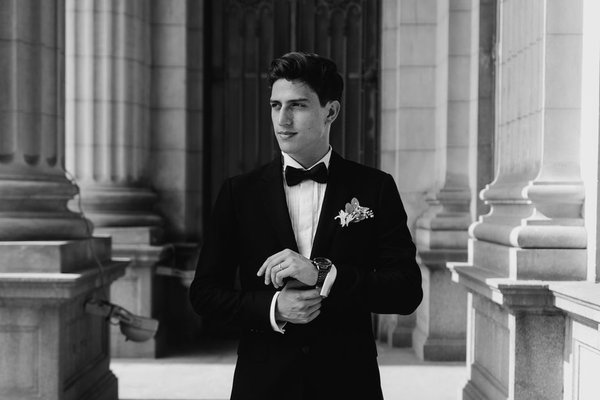
Black tie is one of the clearest wedding dress codes, but not every black suit and bow tie qualifies. For a groom, the appeal is the discipline: the clothes are formal, restrained and designed to look sharp after dark. The result should feel more polished than a standard wedding suit without becoming theatrical. If your venue or evening reception calls for black tie, respect the traditional framework and personalise it through fit, fabric and a few carefully chosen details.
What black tie groom attire actually means
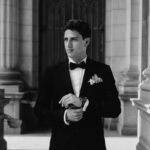
Traditional black tie centres on a dinner jacket rather than an ordinary lounge suit. In British etiquette, the classic combination is a black dinner jacket with silk-faced peak lapels or a shawl collar, matching formal trousers, a white evening shirt, a black bow tie and highly polished black shoes. Midnight blue can also look elegant under artificial light, although black remains the safest choice for a strict dress code.
This distinction matters when shopping for a black tie wedding suit. A normal black business suit may look formal, but it usually lacks the silk-faced lapels, covered buttons and evening trousers that give proper black tie its character. Those details make the groom look intentionally dressed for the occasion rather than simply dressed up for work.
Choose the right dinner jacket
The dinner jacket is the focal point. A single-breasted jacket is versatile and works well on most body types, while a double-breasted style creates a stronger silhouette. Peak lapels are crisp and traditional; a shawl collar gives a softer, slightly more glamorous look.
For a formal UK wedding, black wool or a fine wool blend is difficult to beat. Velvet can work for a winter evening or luxury celebration, but it is more of a statement and should be balanced with classic pieces. A white or ivory dinner jacket is associated more with warm-weather evening wear, so it is less conventional for a British black tie wedding.
Fit matters more than novelty
A dinner jacket groom outfit should sit cleanly across the shoulders, lie smoothly through the chest and allow a little shirt cuff to show. Avoid jackets that pull at the button or collapse around the collar. A final fitting before the wedding is worthwhile because even expensive formalwear looks average when the proportions are wrong.
Wear proper evening trousers
Black tie trousers are normally cut from cloth that matches the jacket and traditionally feature a single silk braid down the outer seam. They should create a clean line through the leg. Belts are not part of classic black tie; side adjusters or braces are better choices.
The hem should fall neatly over the shoe without fabric pooling at the ankle. That small alteration makes a noticeable difference in full-length wedding photographs.
Get the shirt and bow tie right
A white evening shirt provides the necessary contrast. A turn-down collar is the most dependable choice for modern British black tie. Marcella or piqué fronts, double cuffs and concealed buttons or dress studs all fit naturally within the dress code. Avoid casual details such as button-down collars.
The bow tie wedding choice is simple: black, proportionate to your face and lapels, and preferably self-tied. A hand-tied bow has a slight asymmetry that looks more natural than a rigid pre-tied version. Bright novelty colours can weaken the formal effect.
Shoes and finishing details
Highly polished black lace-up shoes are standard, with patent leather a traditional option. Sleek Oxfords are especially easy to pair with a tuxedo. Wear black socks long enough that no bare leg shows when seated.
Accessories should support the outfit rather than compete with it. A white pocket square, simple cufflinks and tasteful shirt studs are enough for most grooms. A cummerbund can cover the waistband on a single-breasted outfit, while a low-cut evening waistcoat offers an alternative; the two are not worn together. A restrained buttonhole is also an elegant way to distinguish the groom.
Useful related reading might include groom and groomsmen outfits, wedding shoe styles and choosing groom accessories, all of which help complete the wider formalwear plan.
How to make the groom stand out
The groom does not need a brightly coloured jacket to look different from the guests. Subtle distinctions usually preserve the sophistication of black tie better. Consider a higher-quality lapel finish, distinctive but understated cufflinks, a different buttonhole, or a midnight-blue jacket when the rest of the party wears black.
For example, at a winter country-house wedding with an evening ceremony, the groom could wear a black peak-lapel dinner jacket, matching braided trousers, a white marcella shirt, self-tied black bow tie, polished Oxfords and white pocket square, then add a small white rose buttonhole matching the bridal flowers. He looks clearly like the groom without abandoning the dress code.
Common styling mistakes to avoid
The most frequent mistake is mixing black tie pieces with ordinary businesswear. A standard suit jacket, long necktie, brown shoes or visible belt can make the outfit look inconsistent. Another error is adding too many statement details at once. If the jacket has a rich velvet texture, keep the shirt, bow tie and jewellery simple.
Also consider the wedding timetable. Black tie is fundamentally evening dress. For a ceremony beginning early in the day, morning dress or a formal lounge suit may be more traditional unless the couple has deliberately chosen black tie for the entire event.
FAQ
Can a groom wear a normal black suit for a black tie wedding?
A normal black suit is not the traditional black tie choice. A proper dinner jacket with silk-faced lapels and matching evening trousers creates the expected level of formality.
Does the groom have to wear a black bow tie?
For traditional black tie, yes. A black self-tied bow tie is the classic option. Coloured versions move the outfit towards a more relaxed or creative interpretation.
Should the groom wear a waistcoat with a dinner jacket?
A waistcoat is optional. If worn, it should be an evening waistcoat designed to sit low beneath the jacket. A cummerbund is an alternative, but the two should not be worn together.
Can the groom wear a buttonhole with black tie?
Yes. A simple buttonhole works well for a wedding and is one of the easiest ways to distinguish the groom. Keep it proportionate and coordinate it with the wedding flowers.
A polished formula for the wedding day
The strongest black tie groom attire is rarely complicated. Start with a properly fitted dinner jacket and formal trousers, add a crisp white evening shirt, black self-tied bow tie and polished black shoes, then keep the finishing details restrained. That formula gives the groom a timeless formal look while leaving room for personality through tailoring, texture, cufflinks and flowers. When every element follows the same level of formality, the outfit feels confident, deliberate and right for the occasion.