
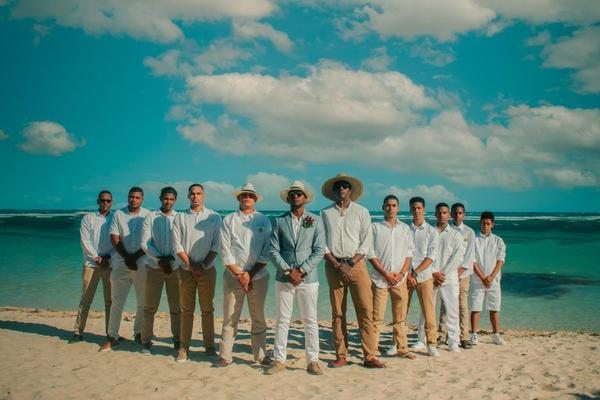
A destination wedding changes the groom’s wardrobe brief before style even enters the conversation. A suit that feels comfortable at a country-house ceremony in Britain may become heavy in Mediterranean heat, while an ultra-relaxed beach look can feel underdressed at a formal hotel or historic villa. The best destination wedding groom attire balances the setting, expected temperature, ceremony formality and the practical reality of travelling with everything you plan to wear.
For UK couples marrying abroad, the aim is not simply to “dress lighter”. It is to choose fabrics, colours and layers that make sense from the airport to the ceremony photographs while still looking unmistakably like wedding attire.
Start with the climate, not the colour
Before choosing navy, beige, ivory or green, look at the likely weather at your destination and the time of day of the ceremony. Coastal heat, dry inland sunshine and humid conditions can feel very different, even at similar temperatures. An evening ceremony may also be noticeably cooler than a mid-afternoon one.
Warm-weather dressing works best when fabric and construction allow heat to escape. Linen is a classic choice because it feels airy and suits relaxed coastal settings, although its natural creasing is part of the look. Cotton and lightweight wool can also work well. Fine tropical-weight wool is often a useful option when you want a cleaner drape than linen without the bulk of heavier tailoring.
For very hot destinations, test the suit for comfort before buying rather than judging it only under shop lighting. A related internal guide on wedding suit fabrics for warm weather would fit naturally here.
Match the outfit to the venue
Beach and coastal ceremonies
A beach wedding groom outfit does not automatically mean an open shirt, rolled trousers and bare feet. Some beach ceremonies are informal, but others are attached to luxury resorts with a polished dress code. For a relaxed setting, a linen groom suit in stone, sand, light grey, pale blue or muted olive can look smart without feeling overly formal. A two-piece suit is usually easier to manage in heat than a three-piece.
Footwear deserves just as much thought. Loafers, lightweight derbies or smart suede shoes can work well on terraces and firm coastal surfaces. If you will stand on sand, test the shoes on a similar surface before travelling.
Villa, vineyard and historic venues
These settings often support a sharper destination groom style. A lightweight tailored suit in mid-blue, taupe, tobacco, grey or soft green can photograph beautifully against stone, greenery and warm evening light. A tie is optional depending on the dress code, but it can make the ceremony feel more formal without adding much weight.
Luxury hotels and formal resorts
A destination wedding can still be black tie or highly formal. Do not downgrade the outfit simply because you are abroad. Keep the required level of formality while choosing lighter construction, a breathable shirt and sensible timing for outdoor photographs.
Choose a suit that can travel well
An overseas wedding suit has to survive packing, transport and sometimes several days in a hotel before the ceremony. Softly constructed jackets with lighter internal structure are often more comfortable in warm weather and easier to travel with than rigid tailoring.
Linen will crease, so perfection is unrealistic. Whatever fabric you choose, unpack it as soon as you arrive and hang the jacket and trousers separately.
Imagine flying from Manchester to Mallorca two days before the wedding. Instead of leaving the suit compressed in a case until the ceremony morning, unpack it immediately and check whether the hotel offers steaming or pressing. That simple habit gives you time to solve a crease, missing button or packing problem before it becomes a wedding-day emergency. A guide to packing a wedding suit for travel is another natural internal-link opportunity.
Keep shirts and layers practical
White remains the easiest shirt colour for most destination looks because it works with pale and dark tailoring. Off-white can also suit earthy palettes. Choose a shirt that feels comfortable against the skin and is not excessively transparent in strong sunlight.
A waistcoat adds formality but also warmth. In hot weather, a different tie, boutonnière, pocket square or suit colour can distinguish the groom without adding another layer.
Coordinate the groomsmen without forcing exact matches
Destination weddings often involve mixed travel schedules, body shapes and budgets, so exact matching can create more stress than it solves. A coordinated palette is usually easier. For example, the groom could wear a light taupe suit while the groomsmen wear beige trousers, white shirts and matching ties.
If everyone is ordering separately in the UK, agree on precise colour families rather than vague names such as “sand” or “sage”. Compare swatches in daylight where possible. A groom wedding-day checklist would also be a useful internal reference here.
Plan for heat without looking unfinished
Small details matter. Wear breathable socks, take a spare shirt for a hot outdoor ceremony, and avoid stuffing phones or wallets into suit pockets because they can distort the jacket in photographs.
Dress as late as practical. There is little benefit in wearing the jacket for an hour in a warm hotel room before leaving. Put on the shirt and trousers first, then add the tie and jacket shortly before photographs or departure.
FAQ
What should a groom wear to a destination wedding?
The outfit should match the venue’s formality and local climate. For many warm-weather weddings, a lightweight two-piece suit with a breathable shirt is a versatile choice. Formal resorts may call for darker tailoring, a tie or black tie, while relaxed beach ceremonies can support linen and softer colours.
Is linen suitable for a groom’s wedding suit?
Yes. Linen is especially well suited to warm, relaxed destinations, but it creases easily. Choose it because you like its breathable feel and natural texture rather than expecting the crisp finish of structured wool all day.
What colour suit works best for a wedding abroad?
There is no single best colour. Light neutrals, pale blue, soft grey, olive and tobacco suit many warm destinations, while navy and charcoal can work for formal evening events. Consider the venue, wedding palette and how the colour looks in strong natural light.
Should the groom wear a tie at a beach wedding?
Only if it suits the dress code and overall level of formality. A tie can make a lightweight suit feel more ceremonial, while an open collar may suit a genuinely relaxed beach event. Decide in advance so the groom and groomsmen look intentionally coordinated.
Build the outfit around the whole day
The strongest destination wedding groom attire is not simply a lighter version of a UK wedding suit. It is clothing chosen for the ceremony location, weather, travel demands and photographs. Start with climate and venue, then select fabric, construction, footwear and accessories that support those conditions. When each choice has a practical reason behind it, the finished look feels polished and the groom can focus on the wedding instead of counting the minutes until the jacket comes off.