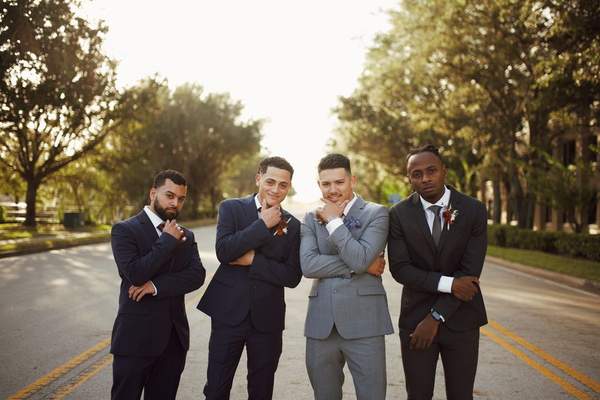
Matching suits look polished in wedding photographs, but identical outfits are not always the best solution. One groomsman may need a different jacket cut, another may live abroad, and someone else may be reluctant to spend hundreds of pounds on rarely worn clothes. Learning how to choose groomsmen suits means balancing those realities with the style of the celebration.
The most successful wedding party looks coordinated without making anyone uncomfortable. Start with the venue, dress code and groom’s outfit, then work through colour, fit and cost before ordering.
Set the Dress Code Before Choosing a Suit
A country-house ceremony, a relaxed coastal wedding and an evening black-tie reception call for different clothes. Check the invitation wording and venue atmosphere before choosing a particular suit online.
For a conventional formal wedding, a well-fitted two-piece or three-piece suit in navy, charcoal or mid-grey is versatile. A summer garden ceremony may suit lighter colours. If the dress code is black tie, traditional dinner suits and appropriate evening accessories are the more consistent choice; an ordinary business suit is not a direct substitute.
Look at photographs of the venue in the season of your wedding. Heavy, dark outfits can seem out of place at a sunny beach ceremony, while pale linen may be too casual for a grand evening reception.
Give the Groom a Clear Visual Role
Coordinated does not mean indistinguishable. Decide how the groom should stand out before settling the wedding party suits. He might wear a different colour, a contrasting waistcoat, or a distinctive tie and buttonhole.
For example, a groom in a charcoal three-piece suit could be accompanied by groomsmen in charcoal two-piece suits with matching ties. The shared palette brings everyone together, while the waistcoat signals whose day it is.
Compare outfits in daylight, not just shop lighting. Photographs of fabric samples beside the groom’s jacket and bridesmaids’ colours can reveal clashes that product pictures hide.
Choose Colours That Work Together
Start with two or three main tones rather than matching every detail. Navy with muted green accessories works across many settings; grey with burgundy or soft blue is equally adaptable. Black is sharp for evening celebrations but may feel severe at an informal daytime event.
Do not assume two suits described as “navy” will match. One may lean purple and another almost black. For identical shades, order from the same range and compare samples. If suppliers or body shapes require different suits, deliberate tonal variation looks better than an imperfect near-match.
Keep shoes, belts, ties and pocket squares in the plan. Matching accessories can unite different jacket cuts, although everyone need not wear exactly the same shoes if comfort requires another option.
Match Fabric to Season and Venue
Fabric affects comfort, drape and formality. Wool and wool-rich blends are useful year-round options, with lighter weaves often more comfortable in warmth. Linen creates an airy, relaxed look but creases readily. Cotton and blended fabrics can work for less formal celebrations.
For a July outdoor wedding in Cornwall, picture five groomsmen standing through photographs and speeches. Lightweight navy suits with breathable shirts may be more practical than thick three-piece outfits. For a winter ceremony in Yorkshire, warmer wool and suitable overcoats make more sense.
Ask about lining and fabric weight, not just the material on the label. UK weather is unpredictable, so plan for rain, wind and changing temperatures.
Fit Different Bodies, Not Just One Photograph
A useful groomsmen suit guide treats fit as a priority rather than insisting everyone wears one fashionable silhouette. Slim, tailored and regular cuts vary even within the same brand. A jacket should permit movement, sit smoothly across the shoulders and button without pronounced pulling.
Check trouser length with the intended shoes, and make sure sitting and walking feel natural. Some groomsmen need shorter or longer sizes, adjusted waists or a different cut. These options beat an uncomfortable uniform.
Book fittings early enough for alterations. Sleeve and trouser lengths can often be adjusted, but major shoulder changes are difficult. Anyone ordering remotely should get accurate measurements and check the retailer’s sizing and returns policy.
Agree on Budget and Who Pays
Money makes choosing wedding suits awkward unless expectations are discussed openly. In the UK, there is no universal rule about whether the couple or attendants pay for groomsmen formalwear. Explain the arrangement before requesting commitments.
Calculate the full cost: suit, shirt, tie, shoes, alterations, delivery and any hire deposit or damage fees. Buying may suit someone who will rewear a classic navy outfit, while hiring can work for a one-off formal look. Compare actual quotes rather than assuming one option is always cheaper.
If budgets vary, specify a suit colour and shared tie while allowing approved retailers and prices. Ask privately about affordability; nobody should need to explain their finances to the group.
Plan Ordering, Fittings and Final Checks
Choose an outfit direction several months ahead where possible, especially when sizes, suppliers or locations differ. Confirm availability and lead times with the retailer or hire company. Leave room for exchanges and alterations instead of trusting an estimated dispatch date.
A shared note can record everyone’s size, outfit, payment responsibility, collection date and fitting appointment. Before the ceremony, check that buttons, hems, shirts, ties and shoes are all present and clean.
For related decisions, consult a wedding suit colour guide, a groom’s accessory checklist and advice on choosing wedding shoes. These are useful planning topics to review together rather than treating every purchase separately.
Frequently Asked Questions
Should all groomsmen wear exactly the same suit?
Not necessarily. Identical suits create a uniform look, but coordinated colours and accessories can look intentional when cuts or sizes differ. Consistent formality matters more than forcing one fit on everyone.
How far ahead should groomsmen order their suits?
Begin researching several months ahead and follow the supplier’s delivery and alteration times. Allow extra time for made-to-measure orders, overseas attendants and peak wedding periods.
Should the groom wear the same colour as the groomsmen?
He can, particularly if his waistcoat, tie or buttonhole differs. A contrasting but complementary suit is another option. Compare the full group together before deciding.
Are hired suits better than purchased suits?
Neither is automatically better. Hiring may control the cost of a specialised look; purchasing can make sense for a suit someone will wear again. Check alteration flexibility, condition, fees and deadlines.
Bring the Whole Look Together
The right suits support the celebration rather than competing with it. Decide on dress code and budget first, then use colour, fabric and accessories to build a coherent look around the groom. Give each person flexibility for a comfortable fit and enough time to get it right. When everyone feels like themselves, the wedding party looks more confident too.